
Blogpost #1
When Note-Taking becomes heavy
The role of friction in Note-Taking
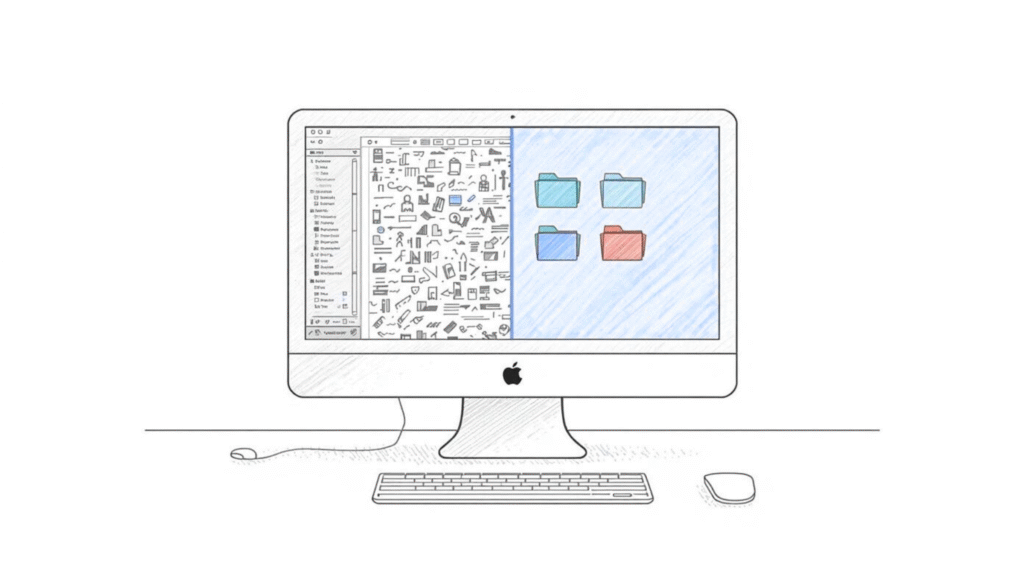
“Wasn’t that supposed to simplify things?”
You want to capture a thought, build a knowledge system, or finally create something that brings clarity. Instead, things get complicated. The first idea is already gone—or it takes so much effort to decide where it belongs that the moment passes. What once felt promising begins to turn against its own intention. The system that was meant to create relief and simplicity starts to introduce resistance, strain, and friction.
Friction appears when your thinking and your system’s structure drift too far apart. In my experience, there are two distinct moments when this usually happens.
The first appears right at the beginning. When you start building a system, you often don’t know where to begin. You have ideas and want to capture your thoughts, but there is no structure yet. Your tool of choice presents you with a blank page, countless design options, and sometimes a vast collection of templates.
If you manage to move past that stage, a second wave of friction often follows later. The initial structure that once helped you get started begins to reach its limits. What worked for early clarity now starts to constrain thinking. Decisions feel heavier and slower.
To make sense of friction, it helps to shift perspective. Instead of treating it as an emotional response—frustration, resistance, or lack of motivation—it is more useful to see friction as feedback from the system itself: a design signal that something needs adjustment.
There are two common misconceptions that often get in the way:
- Friction is inherently bad
- Friction is mainly caused by your behavior
#1 No system removes friction completely—and that’s a good thing
Without friction, there is no traction, no control, no meaningful movement. With too much friction, motion slows, energy gets lost, and systems wear down. Consider life outside your digital tools—relationships, challenges, work, health, and growth. Without any friction, nothing sticks, nothing relates, nothing moves, and nothing lasts. In other words, nothing feels alive.
The same applies to note-taking systems.
In knowledge architecture, friction isn’t a flaw. It is a sign of how well a system is structured and designed. It reveals where a system supports thinking and where it conflicts with how people actually think. This is often where hesitation, mental effort, or avoidance begins to appear. Calm and clear systems don’t eliminate friction. They balance it in a way that feels natural and aligned with how thinking develops. Just as balance enables growth in real life, it does the same in your system.
#2 Your behavior is not the main reason your knowledge system falls apart
Most people assume their systems collapse because they lacked consistency. Common explanations are familiar: I didn’t show up often enough. I wasn’t disciplined enough. I didn’t put in the required effort. This assumption feels intuitive, but it hides a deeper problem. Most knowledge systems don’t fail because people lack discipline. They fail because they are designed to manage projects and outputs rather than to support how the human mind works. They prioritize visible results over the messy, uncertain process of thinking.
This creates a contradiction.
People assume that focusing less on output must lead to worse results. In reality, the opposite is often true. The quality of your work is tightly linked to the quality of the thinking that leads to it. When systems support thinking instead of rushing it, output tends to improve as a consequence—not despite it.
What actually creates friction
Friction seems to appear randomly, but it doesn’t – it emerges from a set of structural pressure points. These points are an inherent part of every knowledge system. Understanding these points or drivers is a valuable step toward creating a system that is intuitive, resilient, and aligned with your needs.
Decisions
Friction grows with decisions. Too many choices slow momentum. Long decisions drain energy. Decisions at the wrong time impact input and output – and, ulimately, how how good your system works.
Value
Friction rises when value is delayed. Effort without return destroys engagement. Systems must earn their place through use, not tool swichting.
Structure
Structure cuts both ways. Too little leads to loss. Too much creates rigidity. Friction appears when structure no longer fits reality.
Traceability
Context degrades quickly. Meaning fades. Re-engaging after context is lost becomes timeconsuming, frustrating and sometimes impossible.
Purpose
Purpose simplifies. Clear purpose reduces friction. Vague purpose flattens importance. Without purpose, everything accumulates.
Separation
Many systems divide what should stay connected: notes and tasks, ideas and execution, learning and action. These gaps are where insights stall.
Closing Thoughts
At first glance, these drivers may feel abstract. But once you understand, that their value is not immediate solutions, but changing your perspective, their value becomes clear. Instead of asking how to be more consistent, you begin to look at your system structure and design choices.
A more sustainable approach is to prioritize thinking over structure. Allow yourself to start messy. Let ideas exist without immediately forcing them into shape or folders. Systems with less friction don’t eliminate decisions—they delay them. They shift decisions to the moment where they are actually useful, rather than forcing meaning too early.
Add structure gradually, as patterns emerge and clarity develops. Build your system step by step instead of starting with a complex architecture you have to maintain. It is important to have an idea or framework in mind, which gives you an anchor for further adaptations.
The most intuitive and resilient systems form naturally based on your mind and needs.
In the next posts, I’ll explore more insights about designing systems. I’ll focus on how the mind actually perceives and processes information and how this can lead to note-taking systems that remain intuitive, resilient, and sustainable over time.