
What tools promise and why structure matters more
Aligning your needs with the capability of tools
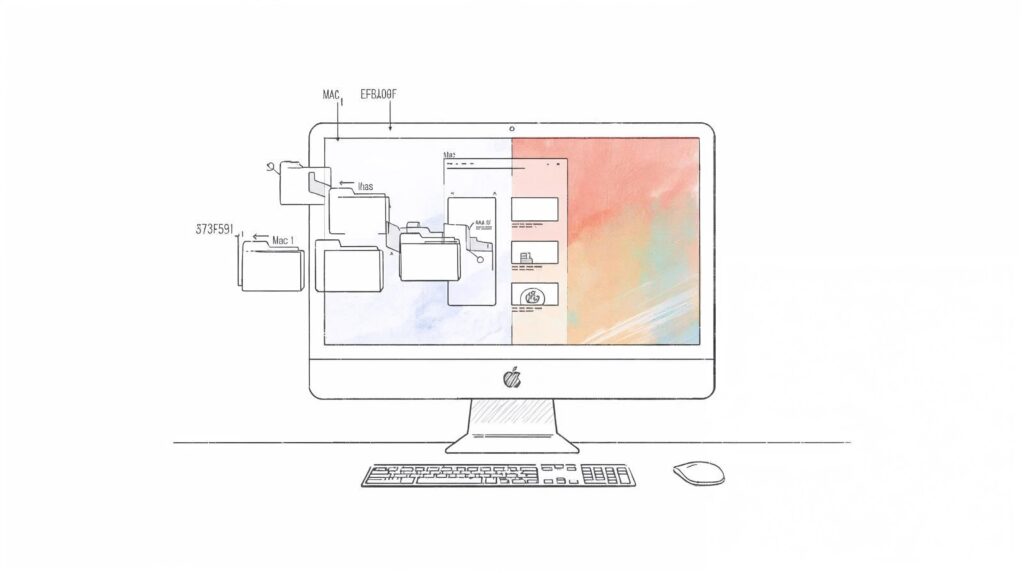
Over the last few years, the hype around note-taking and personal knowledge systems hasn’t faded — it has increased. Market forecasts even predict further growth in the years to come. Low barriers to building and selling digital tools amplify this trend. Deep technical knowledge is no longer required to launch an app, create a plugin, or design a template. At the same time, long-term satisfaction with note-taking and knowledge-management tools remains low. This combination is a strong driver of continuous tool development.
Each new tool arrives with new features, a slightly different focus, and an old promise in a new form. These promises center on enhanced thinking, a better life, and higher-quality work. Or, as Maggie Appleton describes it, they present themselves as tools for thought.
Scrolling through the websites of popular note-taking tools reads like this: we help you think better, organize your life, make sense of the world, become more successful, reach the next level, and have big ideas. Since the rise of the Second Brain movement, note-taking is no longer framed as a productivity topic alone. It has shifted toward self-growth and self-improvement, tapping into ancient human interests such as understanding, memory, and sense-making.
Why these promises are so compelling
These tools will play an important role in the future because remembering, navigating, and relating information becomes more difficult as information accumulates faster than ever. Making good and smart decisions in complex environments means considering a variety of different angles, when making decisions. These tools offer calm, private spaces to think, where we can capture, cope, and connect. A place where we can make sense of the things around us, whatever this surrounding might look like for oneself.
But their attraction goes even deeper. It’s about identity — about who we want to become in the future. We live in a culture of constant observation, evaluation, and improvement. We want to create, to become smarter, more productive, and more successful. And we want to be seen and do something meaningful. These tools present themselves as a way into a more promising future.
Low satisfaction fuels the cycle and drives us constantly searching for new tools and systems. Note-Taking is a universal but polarized topic. Everyone is taking notes, but no one (maybe except Niklas Luhmann) has found the one system. Knowledge systems are imperfect by nature – there is always room for refinement. Our lives change, our thinking evolves, we gain new insights, and we focus on different things. This means there is no stable endpoint for a knowledge system. There are only states and progress. Our tools and structure must adapt to these ever-changing circumstances. This is where new tools promise to fix the current limitations of our knowledge systems.
Tools also offer something very appealing when we get stuck – they offer an immediate solution. And this is what people are looking for, they want something they can install and use right away, without putting too much effort in. And this feeling creates an instant sense of progress and clarity. For a moment or maybe for a while, everything feels under control. We took back responsibility, and we feel a sense of relief and satisfaction. But this feeling is only temporary. Real-world complexity and speed don’t stop at the boundary of a note-taking system.
The real strength of note-taking tools
The real gap when building and maintaining a note-taking or knowledge system lies in aligning our goals and needs with what tools are actually capable of doing. Tools are resources — mediums that allow us to externalize thinking. And this is where their real strength lies. By externalizing our thoughts in a digital environment, our thoughts become persistent, searchable, and reformable.
- Persistence means ideas can be revisited instead of getting lost.
- Searchability allows thoughts to be traced far more easily than in physical notebooks.
- Reformability makes it possible to reorganize knowledge without rewriting everything from scratch.
These elements change the way we relate to our notes. In this digital environment, ideas from different domains can coexist, remain visible, and stay connected over time. The distance between having an idea, evaluating it, connecting it to other concepts, and reorganizing it has collapsed. This means the speed at which we interact with our notes or thoughts has dramatically increased. Nowadays, we consume, capture, and relate information as fast as ever before — and the speed is likely to increase even further. Our mental tasks will shift from plain memorizing to creating meaning and purpose.
The other strength is the availability of the tool on our phones. In photography, there is a saying that the best camera is the one you always have with you. The same applies to note-taking. A tool that is always accessible lowers the threshold for capturing thoughts before they disappear. It doesn’t guarantee quality or insight — but it gives thinking a chance to survive long enough to be worked with.
Yet these tools promise things they cannot deliver on their own. A tool can only perform as well as the structure applied inside it.
So the real question remains: What happens after installing?
Thank you for reading!